
How to Improve Thyroid Health Naturally: What Mesa Patients Need to Know

If you have been told your thyroid labs are technically normal but you still feel exhausted, cold, or mentally foggy, you are not imagining it. Thyroid health is more nuanced than a single TSH number, and for many Mesa patients, standard treatment leaves real symptoms on the table. Whether you are newly diagnosed with hypothyroidism or have been managing it for years without feeling fully well, there are meaningful steps you can take, including some that go beyond what a typical pharmacy can offer.
This guide covers natural approaches to thyroid support, what your labs actually mean, and when compounded thyroid medication becomes a conversation worth having with your provider.
Why Standard Thyroid Treatment Does Not Work for Everyone
Hypothyroidism is one of the most common chronic conditions in the United States, and levothyroxine is one of the most prescribed medications. It replaces T4, the storage form of thyroid hormone. The problem is that your body still has to convert T4 into T3, the active form your cells actually use. For some people, that conversion works fine. For others, it does not, and that gap shows up as ongoing fatigue, brain fog, weight gain, or depression even when TSH looks acceptable on paper.
Factors that can impair T4-to-T3 conversion include:
• Chronic stress and elevated cortisol
• Nutritional deficiencies, particularly selenium, zinc, and iodine
• Gut inflammation or poor absorption
• Liver or kidney dysfunction
• Certain medications, including beta-blockers and some antidepressants
Understanding this helps explain why two patients with the same TSH reading can feel completely different. Thyroid health is a systems issue, not just a numbers issue.
Natural Ways to Support Thyroid Function
No supplement or lifestyle change replaces thyroid medication when it is medically necessary, but several evidence-informed strategies can meaningfully support thyroid function alongside your treatment plan.
Nutrition First
The thyroid depends on specific nutrients to produce and convert hormones. Selenium supports the enzymes that convert T4 to T3 and may reduce thyroid antibodies in autoimmune thyroid disease. Iodine is required for hormone synthesis, though excess iodine can worsen some thyroid conditions, so work with your provider before supplementing. Zinc plays a role in thyroid hormone signaling. Iron deficiency has been linked to impaired thyroid function, particularly in women.
For most Mesa patients, a whole-foods diet rich in leafy greens, lean protein, nuts, seeds, and minimally processed foods provides a reasonable nutritional foundation. If your provider suspects deficiencies, targeted testing and supplementation make more sense than blanket high-dose supplementation.
Gut Health and Absorption
Your gut affects thyroid function in two important ways. First, much of the immune regulation tied to autoimmune thyroid conditions like Hashimoto’s is rooted in gut health. Second, poor gut absorption can reduce how much of your thyroid medication actually reaches your bloodstream. Levothyroxine in particular is sensitive to timing, food, and other medications. Taking it on an empty stomach, away from calcium, iron, and coffee, matters more than most patients realize.
If you have significant gut symptoms alongside thyroid issues, that is worth bringing up with your provider as part of the broader picture.
Stress and Cortisol
Chronic stress suppresses thyroid function through several pathways. High cortisol reduces TSH output, impairs T4-to-T3 conversion, and increases reverse T3, an inactive form of thyroid hormone that competes with active T3 at the cellular level. This is part of why patients going through high-stress periods often feel their thyroid symptoms worsen even without a change in labs.
Practical stress reduction, including sleep prioritization, consistent movement, and addressing sources of chronic stress, is not a vague wellness suggestion here. It is a physiologically relevant part of thyroid support.
Exercise and Movement
Regular moderate exercise supports thyroid function, helps with the weight management challenges many hypothyroid patients face, and improves the cellular sensitivity to thyroid hormone. High-intensity exercise done to exhaustion can backfire for people whose thyroid or adrenal function is already under strain, so calibrating intensity to your actual energy levels matters. Walking, swimming, resistance training, and yoga are all reasonable starting points.
What Your Thyroid Labs Are Actually Telling You
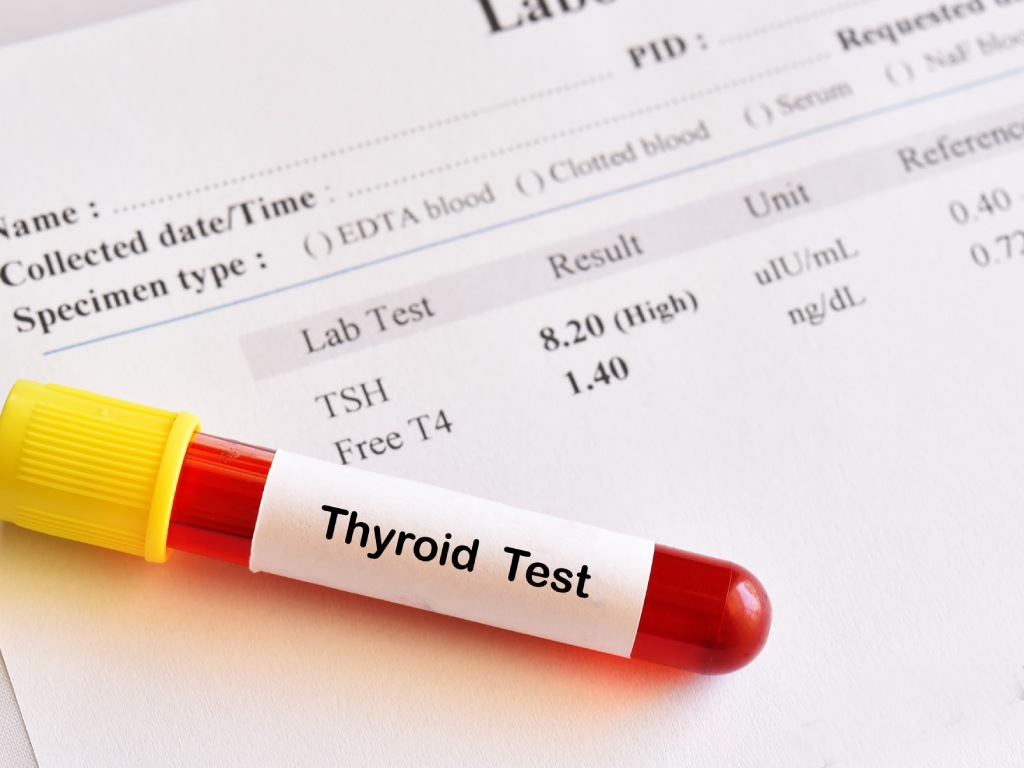
A standard thyroid panel usually includes TSH and sometimes free T4. That is often not enough information to understand why someone feels unwell. A more complete thyroid workup might include:
• TSH: the pituitary signal to your thyroid, useful but not the whole story
• Free T4: the storage hormone your thyroid produces
• Free T3: the active hormone your cells use, often the missing piece
• Reverse T3: an inactive form that competes with active T3
• TPO and anti-thyroglobulin antibodies: markers for Hashimoto’s thyroiditis, an autoimmune condition that is the most common cause of hypothyroidism in the US
If you have never had free T3 or antibody testing done, that is a reasonable conversation to have with your provider, especially if you are on medication but still symptomatic.
When Compounded Thyroid Medication Becomes Part of the Conversation
For patients who do not feel well on levothyroxine alone, compounded thyroid preparations offer options that commercial products do not. The most common reason is the need for combination T4/T3 therapy. While desiccated thyroid extract (like Armour Thyroid) is commercially available, it comes in fixed ratios. A compounding pharmacy can prepare customized T4/T3 combinations at ratios tailored to a specific patient’s labs, symptoms, and provider’s clinical judgment.
Compounded thyroid preparations are also useful for patients who:
• Have sensitivities or allergies to fillers, dyes, or excipients in commercial products
• Need a dose that is not available in a standard commercial tablet
• Require a specific dosage form, such as a sustained-release capsule or a liquid for patients who have difficulty swallowing
• Are working with a provider who monitors free T3 levels and wants to fine-tune the T3 component of therapy
This is not about replacing good medical care. Compounded thyroid medication works best when a knowledgeable provider is interpreting labs, adjusting doses, and tracking how a patient actually feels over time, not just watching TSH.
What Mesa Patients Should Know About Working with a Compounding Pharmacy
Not all compounding pharmacies have the same level of expertise with thyroid preparations. Thyroid hormone is sensitive to heat, light, and moisture, and the quality of the active pharmaceutical ingredient and the compounding process both matter. When evaluating a compounding pharmacy for thyroid medications, it is reasonable to ask:
• Is the pharmacy PCAB or NABP accredited?
• Do they compound thyroid hormones routinely, and what dosage forms do they prepare?
• Can they work directly with your prescriber if dose adjustments are needed?
• What is the source and quality of their T3 and T4 active ingredients?
RxFormulations has been serving Mesa patients since 2002 and has extensive experience with thyroid compounding, including both T4/T3 combination formulas and sustained-release preparations. Our pharmacists work closely with prescribing providers to make sure the formulation fits the patient, not the other way around.
How to Improve Thyroid Health Naturally in Mesa
The short answer is that there is no single fix. Thyroid health responds to a combination of good nutrition, stress management, sleep, appropriate movement, and when needed, medication that actually fits your physiology. If you have been on standard thyroid medication for a while and still do not feel like yourself, that is worth investigating rather than accepting as the best you can do.
Start by asking for a more complete lab panel. Talk to your provider about whether your T3 conversion might be an issue. And if compounded thyroid medication comes up as a potential option, know that a compounding pharmacy experienced in thyroid preparations can be a genuine resource, not just a workaround.
Ready to Talk About Your Thyroid Health?
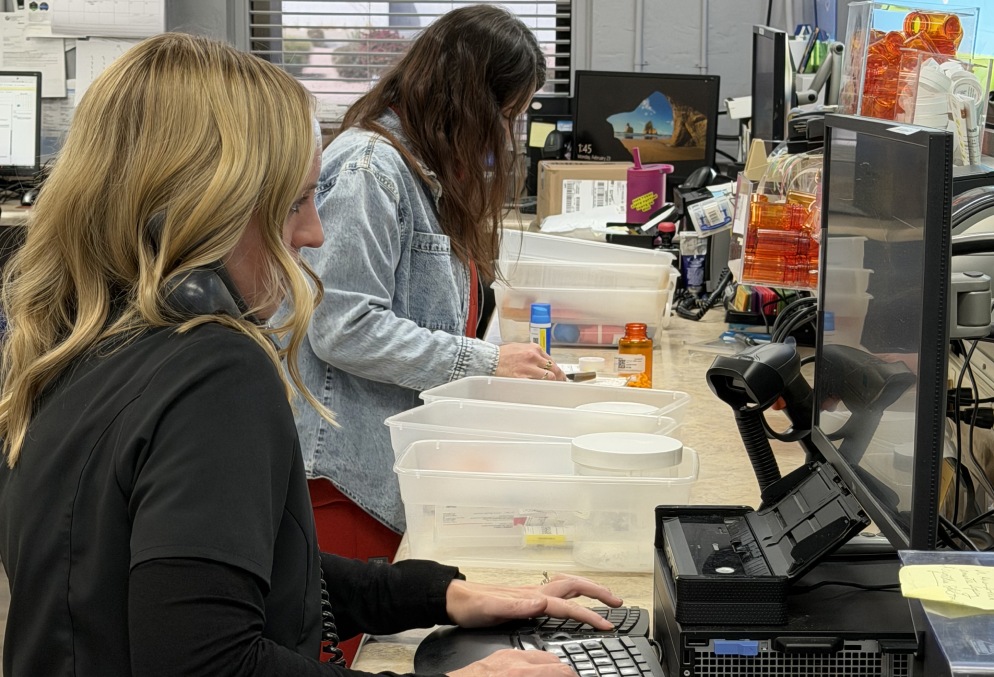
If you are a Mesa patient with thyroid questions, or your provider has mentioned compounded T4/T3 therapy as something to explore, our pharmacists are here to help. We offer one-on-one consultations and work directly with your prescriber to find a formulation approach that makes sense for your labs, symptoms, and lifestyle.
Request a free pharmacist consultation ->
Submit a refill or new prescription request ->
RxFormulations | 5949 E University Dr, Mesa, AZ 85205 | (480) 854-3100 | amber@rxformulations.net | Monday-Friday 8AM-5PM
References
[2] U.S. Food & Drug Administration. Compounding laws and policies. FDA.gov.
[3] NABP. Compounding pharmacy accreditation. nabp.pharmacy.
[4] Mullur R, et al. Thyroid hormone regulation of metabolism. Physiol Rev. 2014.